Archive | USA RSS feed for this section

Boston bombing: Tomorrow’s terrorists are neither religious nor smart.

19 Apr

012burger1a

1451: GMT, 19th April 2013

BBC Monitoring has just drawn attention to a comment that has been posted to a jihadist internet forum. The BBC says that the post argues against speculating on the identities of the suspects, but notes that the bombing reveals the ‘prominent weak point’ of Western countries. Below is an excerpt from it:

“…The purpose is what results from this operation and its repetition, such as instilling terror, costing America more financial burden, and economic repercussions which will weaken and eventually kill it…”

The BBC does not attribute these words to any person or group so we do not know who posted them or why. We all know that anyone can post anything on the internet and therefore we must be cautious without evidence.

But there are two points of great interest in the comment, particularly if you compare it to the terrorist movements of the last seventy years:

* If one replaces the word “America” with the name of any other world state, one sees how the sentence is actually a direct “copy-and-paste” from the manifesto of every terrorist group in world history.

* The prediction in the sentence that “instilling terror” can “eventually kill” a country is false. It has never happened.

Now, we see why that forum comment is so significant. 

It is the fast food Cheeseburger of political or religious ideology.

Like all fast food, it is just a triumph of packaging and promise that will let down the consumer immediately after the first bite. It is a weak shadow of what it sets out to be. It cannot sustain because it contains only ingredients designed to profit the person who sells it – not the person who swallows it.

The only real winner is the vendor, not the purchaser. Sure, the hungry mouth gets filled but that same hungry mouth will instead choose something more wholesome at the soonest chance.  The Boston terrorists had clearly been fed so many ideological cheeseburgers that one wonders if they had ever studied the tactics of a real, fully-crewed and organised terrorist group. 

006pattie

For example, let’s take the list of bombings that the IRA carried out in Britain. One can immediately see how ineffective terrorism is in bringing down a government or a State. Just scroll down that very long list of bombings and then recall that the IRA is now effectively defunct. Its political wing now sit at the same negotiating table as their political enemies.

They ultimately chose democratic debate over explosive devices. The ordinary members of the public who became the IRA’s bomb victims – killed, seriously injured or just plain inconvenienced – payed the price while a mechanism for political and intellectual debate was hammered out between two conflicting political groups.

Once the ruling political system allowed the IRA a path to legitimate political status, the violence stopped like a tap being turned off. Regardless of whether they were described as freedom fighters or terrorists, all the players in the card game realised that the concept of bombing yourself to the negotiating table is a fantasy.

The modern world no longer works that way, whether the terror is driven by the state or the individual. Tomorrow’s terrorists will be neither religious nor smart. The political and religious world we all now inhabit evolves through learning by its past mistakes. Even the spectacular horrors of events such as 9/11 now stand primarily as lessons that terrorism only delivers what it says on the tin and nothing more.

015burger2

Any power that terrorism momentarily hands to the terrorist group is more than wiped out by their path towards public acceptance now becoming steeper and rockier. The terrorism makes it harder  for the ideology behind it to be embraced.

The world may now have heard of the terrorist but it loves their cause far less. When whole governments or religions terrorise innocent people, they learn this fact as well.

Though the last century saw many terrorist groups and governments learn this fact, the Boston bombings remind us that some people have still not understood. The political and religious world has moved on, carried by those who learn. The world’s greatest political and religious groups survive precisely because they are educated and enlightened and not because they kill. They grow by their strength of shared values, not terror.

They grow strong from good ingredients, not junk food.

055fruit

Is your new car watching over you?

14 Feb

001newcars

In the 1980’s, if Britain or the United States governments had declared that every citizen must report their personal whereabouts and also to whom they spoke, there would have been an understandable mass revolt and rioting in the streets.

Instead, we citizens were sold the mobile or ‘cell’ phone.

Lured by the promise of entertainment, technology and kudos, we rushed out and bought phones for ourselves and our children.

We bought the phones willingly. The needs of government were met.

It was all about information – being connected and being in communication. Being the first to know, the first to hear.

Twenty years later, we now understand how our cellphones pinpoint our position and our conversations and texts are widely and routinely intercepted and analysed ‘in the interests of National Security’.

Our billing information has been sold and resold a hundred times. British Police forces have sold personal details of car crash victims to ambulance-chasing insurance firms. Apparently, that is okay by us. Absolutely fine.

Since we are anxious to be seen as law-abiding citizens, we trade in our privacy in a way that was utterly unthinkable, even as recently as 1990. We ignore the outrageous  invasion of our privacy by Google, Microsoft and a million life insurance and healthcare agents who now own copies of all our private details.

Some of us actually help out by uploading our private life and photo album details to Facebook.

Next on the agenda of big business and world government: our car.

“…all citizens shall declare their car  journeys, itineraries, speeds attained and addresses visited…”

We are sold ‘infotainment’ and connectivity packages for our new car. We buy them, using our own money.

Intel put it perfectly in their press release:

“…Cars are gradually transitioning from an information isolated island to a mobile information processing platform…”

The statement is almost benign in its apparent casualness.

However, be not fooled. The parking camera package that you bought because you are too stupid to park your own car can now record the license plate of the car behind and in front.

One click of a switch at “Headquarters” and every driving citizen becomes an unmarked Police cruiser, fitted with Automated Number Plate Recognition.

Your three year old car already tells tales on you to its manufacturer. When you send it in to the dealer to have it serviced, you naively believe that the big red box it gets plugged into tells the mechanic what is wrong.

It doesn’t. It uploads data to the manufacturer, who then tells the mechanic what is wrong. The manufacturer now knows if you hit the rev limiter…while in sixth gear. How often the ABS has been activated today.

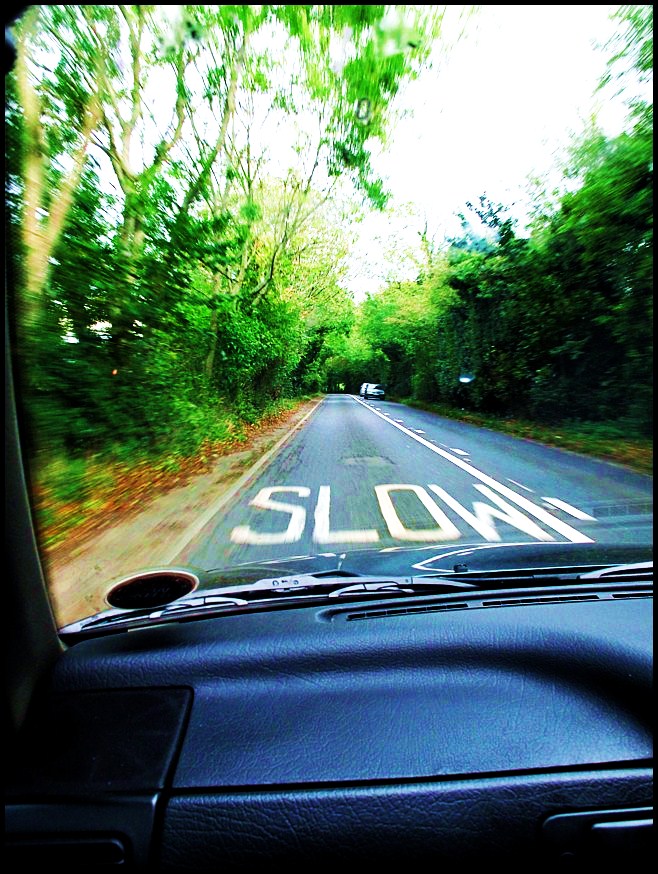
028rwtrafficYou naughty thing, you! Let us hope that the manufacturer doesn’t tell the Police, or you’d be in deep trouble. Or your insurance company. Or your leasing company. Or your boss, who is considering you for promotion.

Perhaps, having read this far into my post, you are inclined to believe that I am being a little paranoid? Well, it only takes one click and your car uploads its data. The only question that remains is: to whom? 

Your car is already programmed to transmit your speed. Your sat-nav already does so.

Governments around the world are waiting for your opinion. They like opinions. It saves them having to ask.

When will the switch be ‘clicked’?

Well, that really depends on how we citizens feel about it. This is the ‘Big One’. All our other information is already accessed by the State in most Western countries but our car is the last frontier. It has always given us the feeling of freedom.

If we citizens realise that our car is now no longer a source of freedom but instead just expensive transportation, we may decide to take a taxi instead. We may rebel and refuse to buy our next car.

So the trick is to make us want to buy our next car.

It won’t be hard. Governments have progressively increased taxation on older cars and manufacturers have raised the prices of key spares to the point where it becomes uneconomical to keep them working.

As consumers, we take the hint. We buy a new car. Besides, the new one comes with an ‘Infotainment Package’…

Slam dunk.002bankrobber

The bank robber of the future will strip you, tie you up in the trunk of your car, drive to the bank and rob it in your name.

They will walk back to the car and plug in a second-hand ECU under the hood. They will dial a police crime line with your phone, drop it in the gutter and then drive you out to the woods.

There, you will be reunited with your clothes and shoes and given your keys back and told to drive off. As you gratefully sit behind the wheel, the robber will shoot you in the head, put the gun in your hand, close the door and then walk away.

According to the medical records that your doctor sold to your insurance company without your knowledge, you were taking anti-depressants.

According to the Police, always anxious to solve crime, there is an awful lot of even stronger evidence.

CCTV footage shows a person of your height and wearing your clothes and shoes, with a mask. Your phone and your car were tracked across town to the bank. Your phone is found, soaking wet – so no fingerprints there – but its call records are examined. Later that day, you are found behind the wheel of your car by a kid walking his dog.

Why you did it and where you hid the money will remain a mystery. Your life insurance company refuses to pay out to your family.

Isn’t technology wonderful?

Millions of new cars remain unsold. Join the dots…

8 Feb

DSC00283roadwax

As more than 10 MILLION brand new cars join the ever increasing backlog of unsold stock across the World – four million cars in Europe alone – factory closures are now to become a reality.

Well-hidden and secure compounds across Europe, Asia and America are the usual first home for newly-born cars awaiting shipping to dealers. But these are now so full that dealers themselves are having to store cars in their already-packed yards.

The backlog of stored new cars in Europe now runs to four million. US sources point to a similar figure for America and things are so bad in China that Mercedes Benz are offering as much as 30% discount on some new models (S-Class, anyone?) as an attempt to shift stock.

No matter how politicians of all persuasions in all car-making countries try to dress it up, the fact is that production lines and whole factories now stand to be closed as a means of reducing output to match the drop in demand.

As Jorn Madslien’s BBC article here points out, the 7 – 10% annual drop in European demand since the Banking crisis of 2008 is set to continue through 2013 according to industry analysts.

There is no evidence to suggest that this trending reduction in demand will halt. Unemployment, static wages and financial insecurity continue to keep potential customers away from showrooms.021roadwax

What many ordinary people have overlooked in the last three years is the part that national politicians have played in this unfolding catastrophe.

Anxious to deflect criticism of themselves from voters already outraged at the corruption within the financial industry that has wrecked economic prospects, many political leaders have persuaded car giants to keep production at a steady level to avoid redundancies.

In the last three years, American car-making states have seen the quite shocking sight of trains loaded with brand new cars leaving the factories bound for the deserts – where the cars are simply off-loaded and parked up – as an alternative to laying off workers or reducing pay-packets.

Now, this temporary vote-buying strategy has resulted in such high levels of surplus vehicles that the need to close whole factories has replaced the idea of cutting the odd work shift. There is now no other option left.

Discounting of new car prices at dealership level is now rising into thousands of dollars. Some makes and models are almost dead in the water, effectively having so few interested potential buyers that they may as well not be offered.

Chrysler, for example, has more than six months worth of 2013 Dodge Darts parked up right now, as the Wall Street Journal’s article here reveals.

Six months worth of Dodge Darts. At what point does a ‘new’ car technically become an ‘old’ new car? Can a car that has sat out in the open for most of a year still be described as ‘new’? One can easily imagine the challenges that car manufacturers now face.

027

But showroom price discounting – especially up to amounts like 30% – can wreak havoc with the residual value of that car’s marque. The prices of ‘nearly-new’ second-hand versions plummet at auction and fleet clients and Hire Purchase customers can become saddled with a kind of negative equity on their own vehicles. Fleet News made this point six months ago in their article here.

Some commercial vehicle manufacturers have been hit really hard as savvy fleet operators have held onto their trucks for an extra year or two to avoid this depreciation risk. One major truck maker sold zero units of its product in the UK in 2011 as regular clients simply sat tight.

General Motors has only now struggled back into profit in the US after years in the red with an unloved product range. Desperate for small cars it didn’t have, it hastily re-badged Asian Daewoo products, slapping a ‘Chevrolet’ badge on them and shipping them into America.

Now, it is watching as its twin European badges – Vauxhall and Opel – fight a desperate war to survive. It is abundantly clear that 7-10% over-capacity plus some ageing and inefficiently designed production facilities cannot be propped up at all cost.

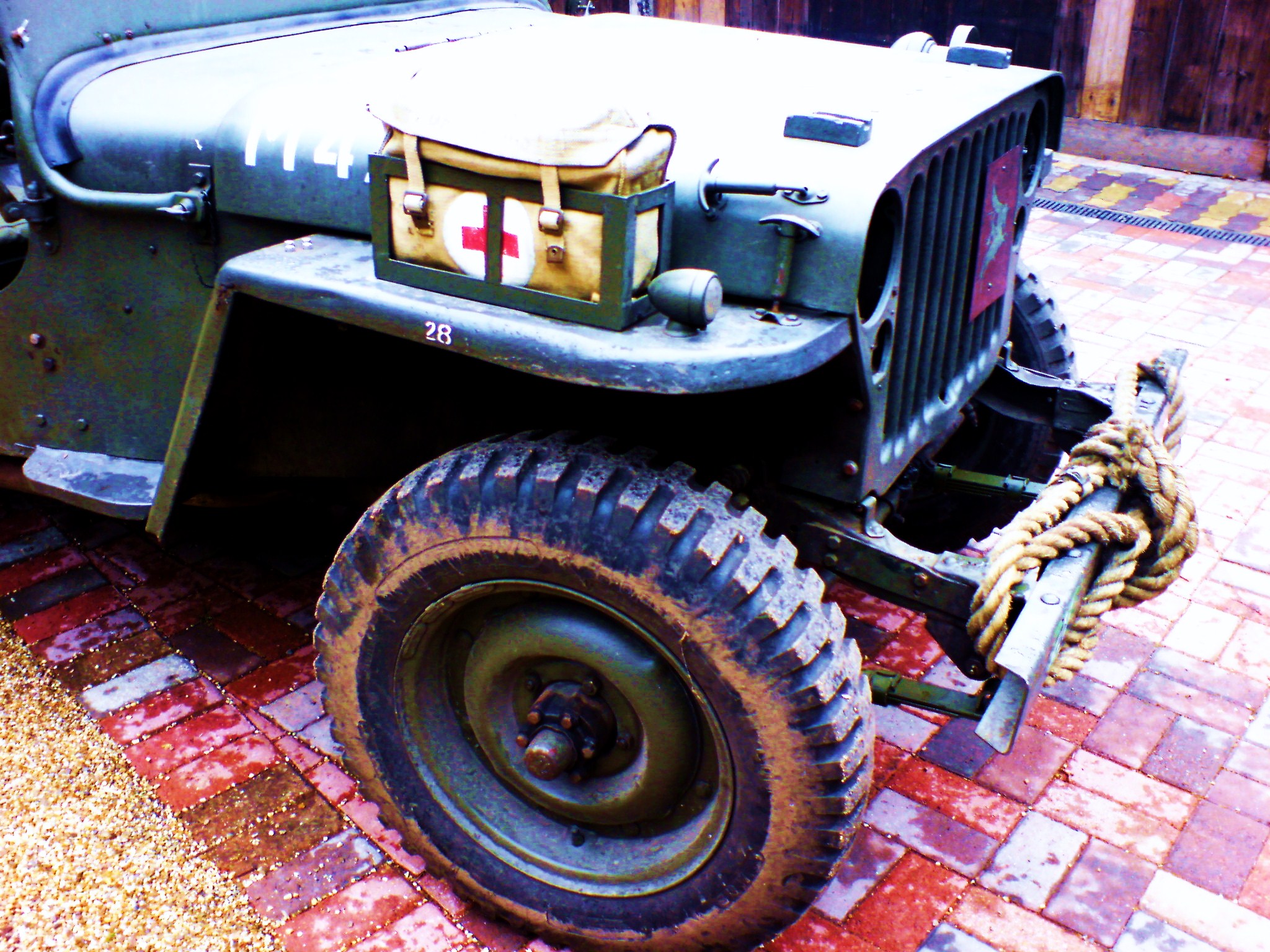
roadwaxJeep 101

In this situation, the cost will be production line workers. There are no deserts in Europe to hide millions of unwanted cars.

The emerging giant economy of China fueled the revival of hopes in 2009 for top marques like BMW, Cadillac and Rolls Royce. Dying on their feet as Europe and America struggled with a banking collapse, these big names spearheaded a rush to satisfy Chinese auto sales volume growth of 46% in that year.

But by 2010 that figure had dropped to 32% and in early 2011 it slumped to 2.5%.

We are not supposed to use the word ‘problem’. The fashionable and politically correct word today is ‘challenge’.

The ‘problem’ is over-production of depreciating consumer goods.

The ‘challenge’ for today’s politicians is to find unemployed workers jobs that can generate their family a surplus income. Enough to buy yet more depreciating consumer goods and certainly more than enough to live on.

If today’s politicians actually have a solution to this challenge, then they are keeping very quiet about it.


Dorset road deaths are 7 times UK average, 17 times US.

26 Jan
IMG_6700

picture courtesy of Schneebremse

As Dorset Police have reduced the number of traffic officers patrolling the roads, deaths have increased in the UK county.

The Police cuts – applied in 2012 – have coincided with the number of road deaths increasing, reversing the previous trend. The BBC have uploaded an interesting article covering the story here.

Closer examination of the available data on the subject reveals that Dorset may have a far more serious road safety issue than has been reported or realised.

Using a selection of UK and  US government statistics, it can be shown that the county of Dorset actually has a road death toll that is seven times higher per mile than the UK average and is a stunning seventeen times higher than the rate for the United States.

And all this from a mostly rural county that has zero miles of motorway within it.

Roadwax recorded the rate of road deaths per day in comparison to the total miles of road in the county of Dorset. Then, this figure was compared with similar statistics for the whole of the UK and the whole of the US, using the most recent and accurate statistics available for comparison.

The results are shown in the table below.

2012.Dorset road death statsdocx

One issue that is raised by this research is how statistics and data can be shown in different ways to highlight particular arguments.

In this case, the simplest figures have been used and the mathematics is also straightforward. By dividing the number of road deaths into the number of miles of road across the area of Dorset, we get a factor – 1: 2,548.

That is: one road death for each 2,548 miles of road, per day.

If we then divide the miles of road available across the UK and also the US by this figure of 2,548 – we obtain the answers shown in the graph. We then compare the daily deaths recorded in the UK and US with Dorset.

If the answers in the graph are to be believed, then the county of Dorset has a serious road safety issue that needs to be examined urgently.

There is currently a lively and valuable debate being conducted over how road safety campaigns should be translated into actual positive results. You can read a range of localised views here and here. The debate extends nationally and is discussed in recognised road safety forums, such as this one.

But what data is being used to form opinions? Which figures should be used to make up arguments? Twice the fatality rate per mile might be seen as a high figure but seven times the national comparison is alarming.

And to be seventeen times more likely to be killed on a Dorset road than on an American road may provide an interesting starting point for the examination of exactly which road safety data figures are being given the most attention within the media today.

021rwmg

Ford (USA) reveal “Back to the Future” version of European Transit

6 Dec

In a bold marketing move by Ford USA, described as “bold” by a panel of analysts who search for boldness in our world, Ford USA have released the first publicity shots of the T-Series/Transit van that will replace the historic E-Series/Econoline on the American continent.

Now, before I begin to ridicule the man on the far left of the photograph, let me point out that Ford are really putting their best brains forward on this project. How do you replace a van as iconic as the E-Series wth something totally new yet retain your customer loyalty?

Answer: You put a 1970’s retro grille on the front and you cross your fingers.

And you make the rest of the van look as much like a Mercedes Sprinter as you can without the Mercedes lawyers calling you up and saying:

“Now, you have made a mistake. A ferry, ferry bed mistake. Ve feel you hef not the full understandink of the word respekt.”

Okay, no cultural stereotyping here on Roadwax but you gotta love the German accent. It rocks.

Right. Now back to the man on the hard left of the picture.

Basically, the story is this.

Ingemar, the director of the photo shoot, doesn’t know squat about how people in warehouses work. But he’s pretty sure that somewhere along the scheme of things, an authority figure with a red clipboard and a hard hat has to shout and order people around.

So he employs an extra called Dave to stand there next to the shutter and shout and wave his hands as though he is in charge. In real life, Dave would keep well clear of the walls because he knows that ‘Blind Danny’ is about to return to the warehouse and collect some pallets, so standing next to a wall right now is not a good move.

In the foreground, to reinforce the fact that this is a parcel van that is being portrayed, Ingemar gets hold of an extra who looks like a parcel delivery driver.

Meet Remy. To compensate for the fact that Remy actually works as a damn good ballet dancer and doesn’t even hold a driving license (he cycles), Ingemar tells him to look exhausted and ignore the bloke who is shouting and waving his arms over by the shutter.

Remy was a little upset that the wardrobe department have mistakenly given him ill-fitting workwear but Ingmar just smiled and nodded his head with a knowing wink. Ingemar ordered the workwear himself and he (like us) knows about these things.

Although Ingemar has got an embarrassingly limited understanding of how the parcel industry actually works, he is highly skilled as a director of films depicting the violent collapse of the human condition. Ingemar just knows instinctively that a third character must be introduced to the picture to destabilize it and imply a note of menace.

Ingemar used this technique to great effect in “Twenty Steps to Trondheim” and “Death Is Thursday” which both won him awards at the 2012 Cannes Festival of Stuff Going Straight to DVD.

Cue Colin, far right.

Colin is an English nanny who works for Ingemar’s partner now that his US work visa has expired. Colin is cheap and reliable and does what Ingemar tells him to do.

So, Ingemar says:

‘Colin, I am feeling that you should be standing with a sack barrow in front of you. I think this works.”

Does Colin point out to Ingemar that this looks utterly stupid and removes the last shred of authenticity in the shot? That the entire warehouse is filled with palletised goods, none of which could be moved with a sack barrow?

You decide…

Obama Wins Second Term. World Breathes Out.

7 Nov

Good cat wins. Bad cat loses. That’s how we cats like it.

For us British, the US Presidential election results are revealed between midnight and 6am.

Thoroughly frustrating. Traditional as Halloween, yes, but also maddening.

It is like being forced to watch a five hour presentation of your friend’s holiday pictures when all you really want to see is the bit where they lost control of their rental car and drowned it in the drainage lake beside the airport as they were returning it.

I waited up until the first states called their results and then went to bed. I couldn’t stand the mental agony of listening to the BBC anchor man asking “So, what does this really mean…?” another 48 times.

Five hours of sleep put me in a curious position. I didn’t want to get up. If I got up then the Republicans might be in power. If I stayed in bed, Obama was still ruling America.
As I lay and stared at the ceiling, I remembered another chilling thought from the previous night. One of the commentators had expressed the view that for decades, America had been driving relentlessly onward to the extreme right.
This theory would be proved correct if Obama now was kicked out and the journey towards fascism was continued after a four year accidental blip.
I stayed in bed some more.
Then, I remembered the white British anchorman asking his chatty multicultural American table guests if it may be a case of “…Americans being tired of the black man in the White House…”.
His chatty American guests weren’t ready for that one. You don’t mention that in America. The chatty American guests had been set up. They squirmed. Slam dunk. Answer that one. You’re getting paid, aren’t you…?
In the whole reportage of the American elections by American reporters, you never heard a single reference to the seething indignation felt by right wing white Americans that there was a black man in the White House.
You used to.
You heard it in the run-up to the previous election. You heard it on Obama’s winning night. You heard it at his inauguration speech. You heard it fade away, once the white racists realised that a black man really was in the White House and there was nothing that could be done.
The white racists’ only hope was to get Obama out of office four years later and have him suffer the indignation of being a “One Term President”. Forgotten as a freak of historical detail.
I leaped out of bed and rushed to switch the TV on.
Obama was thanking America and telling Americans how great they were as a nation. His voice croaked as he pushed it for one last time after weeks and weeks of speeches. I almost cried.
And it was true, what Obama was saying. They are great as a nation.
As a nation, they had seen through that grotesque caricature of an Uber-right-wing politician, Mitt Romney. They had voted instead for Obama, the guy who was born to engage with people and embrace politics. Romney, on the other hand, was born only to employ people and play politics with them. He never hid it. He couldn’t.
Noble (through gritted teeth) in defeat, he nevertheless chilled the blood of anyone who understands the dreadful damage that George W. Bush caused the reputation of the American people outside America. Rich white kids who have shares in arms companies are very out of fashion, right now.
Mitt Romney could never shake off the suspicion in most people’s minds that he had come out of the cinema after seeing The Matrix and turned to his P.A. and said: “Find out how much it would cost us to build a machine like that and have the report on my desk tomorrow morning.”
Removing Obama and replacing him with Romney would have been a PR catastrophe for America. 
The good guy won today.

Lydia Callis, Interpreter, is deleted. ‘Killing the messenger’, Bloomberg Style…

30 Oct

Last night, as New York state (and also half the world) watched TV news for information on Pretty Damn Big Storm Sandy, a star was born.

As New York Mayor Mike Bloomberg  droned relentlessly onward like a Caterpillar D8 bulldozer (shown below), Lydia Callis translated the true meaning of his words for those listeners who still believed in the power of life and who still had hearts that beat.

By 02:00 hrs GMT, as the storm was thrashing Lower Manhattan, Lydia had a Twitter account that was trending like a rocket. She was gaining followers  in a way that meant only one thing: she had become an overnight sensation in the literal sense.

Her outstanding, intuitive and skilled visual interpretation of Bloomberg’s words was truly electrifying to watch.

It was made more so by the contrast between her vivacious delivery and his life-sucking, soul-crushingly unmemorable droning. 

Lydia spoke to the living and the hard of hearing.

Mike spoke to the telegraph poles and the concrete kerb stones.

By morning, Lydia was receiving the kind of internet media attention that spelled trouble. People loved her. People adored her. People wanted to see more of her rather than Bloomberg.

One just knew what would happen next…

In a simple feat of 1950’s Russian Communist Party subtlety, Lydia has been deleted. Airbrushed out of the history of New York’s worst night.

Camera footage of her at Bloomberg’s side on the night of the storm has been cropped so that she is no longer in view. You can just catch a glimpse of her elbow if you have sharp eyes. Yes, the footage looks slightly grainy now; it has been cropped and enlarged  to counter for the fact that it is zoomed in on Mike.

Her upbeat Twitter account comment which she made last night:   “I’m back…!” has gone.

So have all her other comments and posts.

So has her Twitter account.

All that remains is a hashtag page for ‘SignLanguageLady’ – her own original account address. It leads to nowhere. She is now nobody. She has become a ‘non-person’.

Some might argue that it does not befit a mayor’s interpreter to upstage a mayor.

Others might counter that it does not befit a mayor to make his atrociously poor communication worse by removing his interpreter.

Some might argue that she diverted attention from Bloomberg’s words.

Others might argue that this was an act of supreme charity and kindness since Mike has no talent for communication. Not a shred. Nada.

Lydia mentioned last night that, although she loves working with Mike, when Bloomberg tries to “habla” (speak Spanish) – she stops signing. 

Her comment has now been removed from the internet.

Bloomberg has as much in common with the Hispanic community as a hat stand does with a pork pie. This is not a thing that should be pointed out. If it is, then people might think that he is unelectable in the Hispanic community.

People might be right. 

Bloomberg does not speak for and does not speak with the people. He should not be a mayor.

Callis (or: Callas – the spelling that used to appear) spoke for and to the people and she should be.