Archive | Britain RSS feed for this section

Dorset road deaths are 7 times UK average, 17 times US.

26 Jan
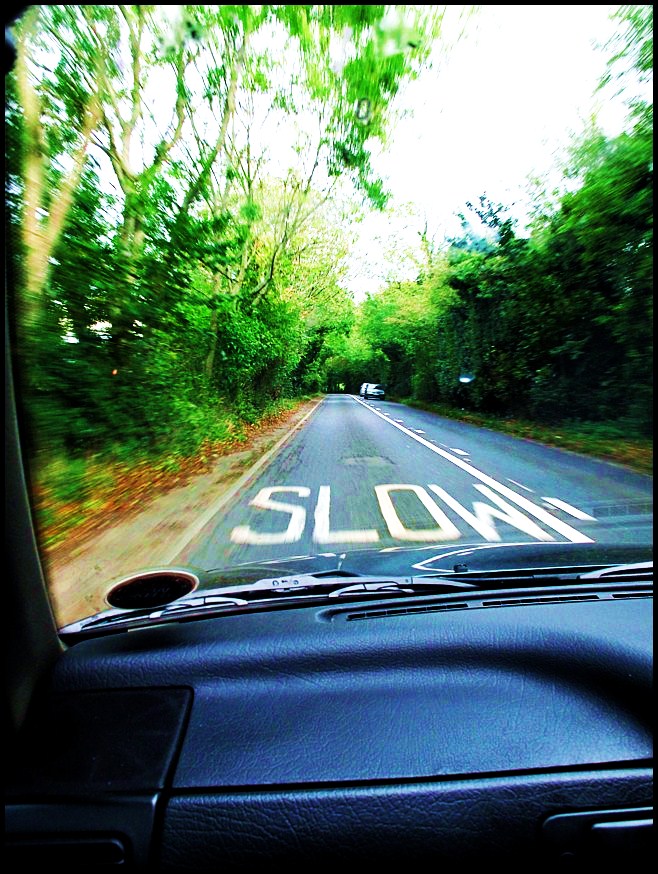
IMG_6700

picture courtesy of Schneebremse

As Dorset Police have reduced the number of traffic officers patrolling the roads, deaths have increased in the UK county.

The Police cuts – applied in 2012 – have coincided with the number of road deaths increasing, reversing the previous trend. The BBC have uploaded an interesting article covering the story here.

Closer examination of the available data on the subject reveals that Dorset may have a far more serious road safety issue than has been reported or realised.

Using a selection of UK and  US government statistics, it can be shown that the county of Dorset actually has a road death toll that is seven times higher per mile than the UK average and is a stunning seventeen times higher than the rate for the United States.

And all this from a mostly rural county that has zero miles of motorway within it.

Roadwax recorded the rate of road deaths per day in comparison to the total miles of road in the county of Dorset. Then, this figure was compared with similar statistics for the whole of the UK and the whole of the US, using the most recent and accurate statistics available for comparison.

The results are shown in the table below.

2012.Dorset road death statsdocx

One issue that is raised by this research is how statistics and data can be shown in different ways to highlight particular arguments.

In this case, the simplest figures have been used and the mathematics is also straightforward. By dividing the number of road deaths into the number of miles of road across the area of Dorset, we get a factor – 1: 2,548.

That is: one road death for each 2,548 miles of road, per day.

If we then divide the miles of road available across the UK and also the US by this figure of 2,548 – we obtain the answers shown in the graph. We then compare the daily deaths recorded in the UK and US with Dorset.

If the answers in the graph are to be believed, then the county of Dorset has a serious road safety issue that needs to be examined urgently.

There is currently a lively and valuable debate being conducted over how road safety campaigns should be translated into actual positive results. You can read a range of localised views here and here. The debate extends nationally and is discussed in recognised road safety forums, such as this one.

But what data is being used to form opinions? Which figures should be used to make up arguments? Twice the fatality rate per mile might be seen as a high figure but seven times the national comparison is alarming.

And to be seventeen times more likely to be killed on a Dorset road than on an American road may provide an interesting starting point for the examination of exactly which road safety data figures are being given the most attention within the media today.

021rwmg

First UK motorist is taught to drive on snow and ice.

12 Jan
A typically devastating scene showing what can happen when snow falls on an English pub.

A typically devastating scene showing what can happen when snow falls on an English pub.

The BBC have released footage of a British driver secretly being taught how to drive on snow and ice. The footage lasts just a few seconds and is hidden within a normal news article.

This news has been greeted with horror by Britain’s biggest safety quango, The Royal Society for the Prevention of Accidents (RoSPA). Although its own website proudly claims to advise drivers on how to drive on snow, it is actually designed to discourage drivers from venturing out by simply re-posting the same dubious information that was printed in 1955.

RoSPA’s approach to the topic is simple. Load the driver down with so much cautionary advice on planning and multiple check-lists that they simply give up and stay indoors.

Even under the specific section ‘Driving on snow and ice’ – it doesn’t reveal any actual advice on how to drive on snow and ice beyond what is stated in the Police Driver’s Handbook. There is not a single mention of winter tyres, traction control, accelerator technique or gearbox control over-ride.

It instead assumes that you are immediately going to get stuck. Their finest advice is reproduced below:

“…move your vehicle slowly backwards and forwards out of the rut using the highest gear you can. If this doesn’t work, you may have to ask a friendly passerby for a push or get your shovel out…”

and the all-time classic:

“…slow down in plenty of time before bends and corners…”

What can easily happen if you don't "reduce your speed in plenty of time" as RoSPA advise...

What can easily happen if you don’t “reduce your speed in plenty of time” as RoSPA advise…

Roadwax sent special reporter Elena Handcart to ask RoSPA why they are fifty years out of touch with modern techniques for driving on snow and ice. Brian Loadsworth, head of Driver Thinking explained:

“The average British chappie is a little bit of a nuisance when it comes to driving a motor car on snow. We find it is far safer to try and keep him at home, checking his battery charge level and walking around trying to find a shop that will sell him a cavalry tweed car blanket.

The more ordinary people we can leave completely in the dark about snow driving techniques, the more space there is on the roads for bus drivers to pull over and cancel their journey. One really shouldn’t encourage this sort of foolhardy attitude among the workers”.

Thomas Schneebinder from the Stockholm Institute for Common Sense disagrees:

“When I was just six years old, my parents gave me my first Volvo. Like all other normal Swedish drivers, I learned to race old Saabs over packed ice by the time I was twelve. I am surprised that this knowledge is forbidden in Britain. Well done to the BBC for leaking it.”

DSC00026.roadwaxsnowJPG

A post box completely cut off by more than four inches of snow – typical of what Britain may have to endure for up to several days

Does your Procter and Gamble washing powder destroy your will to live…?

5 Dec
Okay...its a box of  washing machine powder...but...

Okay…its a box of washing machine powder…but…

Procter & Gamble UK make a huge range of cleaning, grooming and beauty products. Beginning in the United States in 1837, they have always been pretty clever when it comes to selling stuff like washing powder or anything that involves mixing a few chemicals together to spread over yourself or your kitchen.

Trouble is, they can’t write good copy. I mean, they really have a problem with creative writing. A big problem. Scary big.

This is their household favourite, ‘Fairy Non-Bio’ washing powder:

...nothing suspicious here...everything appears to be quite normal...but...

…nothing suspicious here…everything appears to be quite normal…but…

And this is the same pack from another angle:

...there seems to be some kind of important message on the back...

…there seems to be some kind of important message on the back…

And this is what it says on the back:

oh dear...

oh dear…

I think P&G want mother to sing these words under her breath to the tune of:  ‘I’m a Little Teapot’ – that totally bonkers 1930’s hit song – while  smiling lovingly at her baby.

If you happen to be a baby who’s mother is currently smiling at you and singing these words, get out quick. Crawl towards the door and leave. Never look back.

“I’m a little toddler

Short, not stout,”

Okay, this has already gone wrong, hasn’t it? Babies are almost universally stout. Take a look at your own logo at the bottom right of the pack. ‘Stout’ appears to be very much in evidence. You got a problem with ‘stout’?

“Feel my jumper,

Soft, no doubt…”

Wooaaah…right, so this is already getting way out of line. Is this a call from P&G to encourage a a new trend in baby-fondling? Are babies supposed to be admired and assessed for the softness of their jumpers? Is this how we are?

“When I get all dirty,

Hear me shout:”

Ever heard a baby shout? Did that shout include any recognised words? Anything to do with mass-produced cleansing agents?

“Get the box of liquitabs out!”

Oh dear…oh dear…oh dear…

Where does one start?

Close your eyes and imagine a dirty baby shouting that line at you.

Scary Bad.

Imagine if Sesame Street  suddenly did an episode on bestiality. Or, suppose you saw Kermit theFrog with a needle stuck in his arm. See what I mean? The dream is forever shattered…

And as for suggesting that one should clean up a dirty baby by using a sachet of harsh chemicals, designed to be put in a washing machine…

Okay. Now, dear reader, (as fellow WordPress blogger Linda Vernon might say) we imagine that afternoon meeting in the Procter & Gamble marketing department when this copy was actually signed off.

“Well done, team!…Really pushed the ball uphill on this one!…I think we’ve totally cracked the message we want to send to the world!…Fantastic effort all round!…This is really going to hit the target market hard!…So proud…you guys make me so damn proud…!”

“Team, I feel that our job here is done. Now, let’s move straight on to solving World Poverty. Any ideas come to mind…?”

Crazy Bad.

Oh, since you ask, that spoon on the draining board is mine. I got others as well, but that one is particularly damn sexy, ain’t it? My house is fitted with an alarm, by the way…

UK: A part of Europe yet apart.

25 Nov

This is the view of Britain that you can see if you look west from the edge of Europe. It has not changed since the birth of religion. This view remains constant. It is the view one gets from any ship or ferry that is heading to the Port of Dover, England.

To the home-coming Brit, first time visitor or the migrant, this view emerges usually from a cloak of  mist and cloud. The grey finger of land looms ever closer until great cliffs reveal the entrance to the small but restless port.

These last few minutes of the journey let you see yourself and your fellow ferry travelers as you really are. On deck or looking through the huge windows from the passenger lounges, we all stare at this view in silence.

There is nothing to point at, no comment worth making, no detail to arrest one’s thoughts until one is almost there.

I watch as a group of young Eastern European men and women put arms around each other’s shoulders as they gaze. One of them turns and hugs his friend and I see his cheeks are streamed wet with tears, his reddened eyes blinking furiously. His friends crowd round and he breaks his embrace and laughs and hugs them. They all laugh and hug.

By contrast, the well-dressed elderly couple turn away from the railing. He fishes a handkerchief from his sharply ironed trousers and blows his nose. She opens her handbag and suddenly rummages inside it as if attempting to kill a particularly defensive small rodent.

‘Have you got the keys…?’

Her shocked voice barks out to him, echoing across the deck above the hum and whine of the ship’s engines.

‘Yes.’ He replies, returning his handkerchief to its appointed pocket and inspecting with great enthusiasm the grey plastic decking beneath his brown and immaculately polished brogues.

A mother and father spill out through the cabin door onto the deck and repeatedly call for Imogen. Imogen leaves her position by the hand rail near me and becomes tried, found guilty, sentenced and punished in the few seconds it needs for her tired parents to dispense rough justice.

I watch as my brother takes a last photograph from the stern of the closely packed long-distance trucks that litter the open hold below. Sailors are cracking undone the chains that bind their dusty trailers to the deck and the ship’s tannoy is welcoming us to the Port of Dover in English, French and finally, Polish.

‘It sounds better in Polish’ says my brother, slipping his camera back into his jacket. ‘The French version somehow lacks a certain enthusiasm.’

Our great ferry is now shuddering violently as if something large and expensive to replace has broken loose in the engine room. The stern foams as black harbour water is angrily hurled elsewhere to let us turn and line up the bow doors with ramp number fourteen. The ferry over at ramp number nine  begins to depart and we all start to file below, down the stairs to the car deck.

As the 40 tonne trucks are let out of the holds beneath us, people go through the complex nesting procedures that are required to drive an unbroken journey from the dock to home, hundreds of miles inland.

The baby’s bottle needs to be got from underneath the suitcase in the back. The raincoats need to be folded away on the left so that father can see out of the right. The lady in the Audi TT needs her driving shoes on and her stilettos off and stored behind her. Imogen needs to be reminded once more of areas in her behaviour where her mother seeks lasting improvement.

I need to peel the black tape from my headlights so that they can once again shine more brightly to the left. I need to check the oil and water. Doing so fills the drivers behind me in the queue with horror. I am lifting the bonnet. I must have broken down. They are now trapped behind me. They will never be able to leave the ferry. I have ruined their entire holiday. I should not be allowed to drive. I drop the bonnet from shoulder height and stare back at them. Suckers. It works every time.

Our passports were checked earlier by the French Customs officer at the port in France. Then again at the next cabin fifty metres further along in the concrete wasteland by the British Customs officer in France. Then, once parked up in lines and waiting for our ferry, our load space was again checked by a British Customs officer in France.

Now, we leave the ship and join the queue that leads to the British Customs in Britain. Their concrete cave nestles at the foot of the towering cliffs of Dover. We are invited in.

The British Customs in Britain dance and swerve between the two slowly moving queues of heavily laden cars. They wave and point and beckon, let three cars straight through then stop the fourth and lean in to ask a quick question of the driver. The driver must not do two things. He must not sound nervous when asked out of the blue if he has visited Holland and his breath must not smell of alcohol.

Four policemen with loaded machine guns and hands on triggers ensure that we all focus on where we all are and why we are all here. You may look the policemen in the eye but you may not out-stare them. Not unless you wish to be beckoned to steer to the left and to a bay marked out on the wet concrete floor for those who may not understand. Look away. Appear bored and impatient.

The Eastern Europeans in their minibus are waved straight through. Customs are already fully aware who they are. The old couple are stopped. Duty Free alcohol. Where is it? How many bottles? Are there more bottles they have bought in France? Where? In the back? Show me. Fine. Thank you. Move on. The old man’s face is flushed. He was not expecting that. The customs officer knows that and that is precisely why he stopped him. You’d be surprised who tries to break the law.

My brother and I are waved straight through. Our car is sunken on its springs with over a hundred wine bottles that fill the cabin and boot under our coats and jackets. The Customs officers already know that. We are on a day trip. We are bound to be maxed out on wine that costs a quarter of the British price and tastes twice as good. We won’t be smuggling. You don’t get rich smuggling wine using a VW Golf. You use a Mercedes estate with self-levelling suspension, like the old couple did.

I am bringing into Britain what I am entitled to by British Customs. EU law says that the British are allowed to bring as much of whatever they want into Britain as members of a free-trade union of countries called the European Union. That is what free trade is all about.

But that cuts no ice with British Customs officials. They say that I am only allowed to bring in 100 litres of wine and a kilo of tobacco. Every now and then. Not too often.

Britain is different. We are an island. See photo at top of page for further clarification.

RoSPA shocked by how ordinary people actually live their lives.

24 Oct

I’ve got nine lives. You ain’t. Deal with it.

RoSPA has expressed shock and dismay that people drive while holding mobile phones.

The ninety year old veteran survivor of countless accidents and a couple of world wars was startled to discover that  people who drive cars through necessity often ignore common-sense advice on the use of mobile phones.

“It beggars belief!” said RoSPA, looking up from his newspaper while eating his breakfast and stroking the cat. “You’d think these people were quite unaware of the risks they were taking. I shall write an article about all this – you see if I don’t!”

Responding to Roadwax’s undercover reporter, RoSPA’s housekeeper and assistant, Verity Crash-Bangwallop, explained that RoSPA doesn’t get out much these days and is quite unaware that the practise has been going on for over twenty-five years.

“He normally gets upset when it comes up in the newspapers every now and then but he’s usually better by the time I bring him his lunch. Last Thursday, he became incandescent when I explained to him that bears are reluctant to use toilet facilities in woodland areas. I just locked myself in the Safety Room until he calmed down. He’s really very nice.”

The matter first came to light when RoSPA was informed by the local Community Support Officer that a youth had been spotted driving in the village while holding a mobile phone. RoSPA immediately wrote a letter to his local MP to highlight the shocking issue and asked the PCSO to keep him informed of any developments.

Local Independent MP Brian Loadsworth explained that RoSPA was quite unaware of the pressures upon normal members of society to receive and transmit data while driving.

“RoSPA is a nice old chap but his idea of driving is to gently ease into his old Mercedes 300TD and potter the half mile to the village shop to buy some matches for his Aga. He is quite unaware that some people spend many hours of the day driving while being pressurised by bosses and clients to provide them with time-sensitive information.”

“When I recently explained that some mothers need to contact child-minders to say that they were stuck in stationary traffic and would be late to pick up their child as a consequence, he was most resolute. He felt certain that this could be easily done while pulling over into a lay-by, switching the engine off and making the call whilst wearing a high visibility jacket at the side of the road. Fortunately, Verity brought us some lunch and the matter was dropped.”

With UK drivers currently being four times more likely to be involved in an accident when using a mobile phone while driving, pressure is on for the Police and also safety experts to find a solution.

A week long initiative by East Scrains Traffic Police to intercept drivers who were holding phones provided valuable results.

“We got our message across. You can’t drive with a mobile phone clamped to your ear. Not when one of our lads has just broken both your legs,” said Det. Insp Darren Shaft. “We usually get caught up in this nonsense debate about once a year. If we come down too hard then we lose the trust of the public. But we have to be seen to do something. We refer to it as “culling”. It ticks all the boxes and lets us get on with our real jobs.”

Dame Elizabeth Jobs-Agoodun from the road safety charity MENACE was more scathing.

“The threat of being sidelined by your boss for demanding that your car be supplied with the latest telecommunications equipment is no excuse. Working people should live within their means and ensure that they are perfectly educated in all aspects of the instruction manual provided with their leased vehicle. It really isn’t good enough.”

A simple and inexpensive campaign suggested by Roadwax to provide cheap Bluetooth hands-free kits to all motorists for the same price as a Cornish Pasty was launched today.

Det Insp Darren Shaft was not convinced.

“So, where did you get hold of all these then? Let’s ‘ave a look in the back of your van. Hands where I can see them…”

Standard Chartered and FSA stumble after NYSDFS and Jeffrey Robinson kick zimmer frames.

7 Aug

“Comatose”.

With this one word, American financial crime analyst Jeffrey Robinson described the  British Financial Services Authority on the BBC’s national radio news today.

Of course, being a writer, Jeffrey placed the word into a coherent sentence (you get more jobs that way) but his damning judgement rang out across Britain as a thousand pictures could never do.

The New York State Department of Financial Services is gunning for City of London -based Standard Chartered Bank. Standard Chartered was accused of breaking pretty much every rule that matters in an apparent attempt to launder Iranian money.

Standard Chartered shares dived by over 16% in value today as the news got out that the bank had ventured into the cross-hairs of one of the world’s most influential financial investigatory bodies.

Strange then, that Britain’s own FSA was not the one making the accusations or even raising a pair of opera glasses? Not really.

Although the FSA describes itself as the body that regulates the financial industry in the UK, it has an almost unbroken record of not regulating the financial industry in the UK. The FSA’s record is startling in both breadth of inertia and depth of failure.

The FSA has failed to step in on almost every single case relating to a British bank that is now facing charges of corruption, mis-selling, dishonesty or fraud. Almost every high-street bank in Britain is now facing legal action for one crime or another but none of those legal challenges was begun by the FSA.

The FSA appears to be run by people who share the interests of the fraudsters whom it is responsible for regulating and excluding from Financial Services. How else could it explain such a ridiculously poor performance? Has it been off work with a bad back since 2002?

And this is where Jeffrey Robinson comes in. While the American version of the British FSA is regulating British banks, the American version of our business analysts accuses the British FSA of being “comatose”.

You see, as the Americans have often pointed out, we British don’t know how to complain.

And if we do, we often find that doors close in front of us and promotions don’t appear as they used to. Our job positions are deleted in sudden cost-cutting exercises and we may be regarded as “no longer having the correct security credentials.”

Jeffrey Robinson doesn’t need a promotion to keep up with the mortgage on his apartment and he’s not scared of the greasy and corrupt men and women behind the scenes in the City of London. Many British commentators are afraid and with good reason.

Remember, Britain is a small island, easily fitting inside the footprint of some US states. David Kelly ended up committing suicide when he was hounded for leaking a few facts. Well, that’s the official explanation. Read the whole Wiki article before you reach a judgement. The undisputed facts of a very British death.

Just like in World War 2, The Americans may have dived in a little late but they do seem to be digging in rather nicely, making up for lost time. Once again, they’re fighting alongside the British people against a small band of wealthy elitists who threaten the democracy and stability of the west.

It is not quite clear whether Prime Minister Cameron and Chancellor Osborne are willing to ‘do a Rudolf Hess’ and extract themselves from the influence of their six Bullingdon Club friends and the dozens of Old Etonians who are now influential city bankers and financiers. It would be difficult for either of them to use the excuse: “We were only following orders.”

An out-of-touch and under-skilled Prime Minister gives the job of Chancellor to his close Bullingdon Club friend, despite that friend having no personal experience of business. Not a problem…if your city friends actually run the show from the shadows, is it?

Unless American institutions and American commentators start to speak up now, the bad guys could win for good this time.

Today’s war is not about Democracy versus Fascism, nor the failure to regulate. It is a war about Lawfulness versus the illegal and covert creation of supreme wealth and unimaginable power.

UK Traffic Police to declare war on Hipsters. Time to sell the VW.

15 Jul

In an attempt to deflect the rising public hostility towards bankers and politicians and traffic wardens, the UK government has announced a firm  strategy to eradicate Hipsters.

Recent research has revealed that, whereas it is almost impossible to punish those responsible for the economic collapse of western nations, it is a comparatively cheap fix to divert anger towards the relatively unprotected Hipster.

In Britain, it is still illegal to assault or abuse anyone who quotes Morrissey lyrics while wearing Vans trainers that are ironically untied or missing laces.

France plans to bring in a law soon to ban the resting of copies of ‘Brave New World’ on the table of any Starbucks cafe between 05:00hrs and 01:00hrs. However, British Hipsters are generally understood to be too incapable of understanding double-irony and a local solution has been sought.

Professor Brian Loadsworth, Senior Research Fellow at the Falmouth Research Institute into Ridiculous Posturing has worked with the Police and Civil Service to create a strategic response. In his research paper, he reveals the secret behind the planned campaign.

      “…In experiment P/51834, we discovered that Hipsters only have superficial knowledge of the subjects they espouse. We conditioned 6 male  and 6 female Hipsters to quote early Smiths lyrics in return for a reward of food being pushed through the bars of their cage. Sadly, the experiment had to be abandoned when they all died of starvation.

In experiment P/51835, we conditioned 12 more Hipsters to expect an electric shock if they dressed in both leather jackets and coloured leggings at the same time. The resultant electricity bill was exorbitant and the morgue had no room for further bodies. We realised we needed a change of approach.

We contacted the Driver Vehicle Licensing Authority and discovered that 98.73% of post – 1972 Volkswagen Beetles are owned by Hipsters. Hipsters are so desperate to be seen in one that they overlook the fact that these vehicles are neither Tax-Exempt (like the pre-1972 cars) nor economical to run. 

Further consultation with the Association of Chief Police Officers revealed that the necessary law was already in place. Indeed, ACPO made it clear that many Officers would be willing to work for free to implement what they referred to as ‘Operation Savage Dawn’….”

Below is the actual excerpt from the UK Government website. It explains how the Police deal with traffic crimes:

How the police deal with traffic crimes

The police have the right to stop a vehicle for any reason. Find out what your rights are if you are stopped by the police for a road traffic offence and what will happen next.

The photograph chosen by the government website makes it quite clear. A 1970’s Beetle with some fashionable cosmetic rust patches is depicted. The driver of this studiously hip VW is reminded that the police have the right to stop this vehicle for any reason.

Professor Brian Loadsworth has calculated that the Hipster will be consigned to history within 246 consecutive working days, or roughly a fortnight if both Strathclyde and Surrey Police chip in some overtime.

New U.K. Immigrant Citizen Test: If you pass it, you’ll end up like us.

1 Jul

The UK Home Office is re-writing the test given to immigrants wishing to become British citizens. If you are an immigrant to the UK and are currently thinking of applying for British citizenship, then Roadwax is pleased to welcome you to this sceptered isle and provide you with the following information.

A Brief Definition of the United Kingdom:

The UK is made up of a group of different countries who are not actually united. These countries are: England, Wales, Scotland and Northern Ireland.  To get round the obvious problem of historical and cultural disunity, the government describes the citizens of these four countries as collectively being “British”.

Wales, Scotland and Ireland all have their own languages and cultural beliefs. The British government has fought hard to stamp these out and officially obliterate them over the last two centuries. Only a few weeks ago, the young lad carrying the Olympic torch through Cornwall had his Cornish flag ripped from his grasp by a security official, obviously anxious to promote social harmony and cultural respect. This bullying and suppression has served only to enhance the differences within Britain and reinforce mass contempt for Whitehall.

Immigrant communities also bring with them their own cultural values and belief systems. Likewise, these are tolerated so long as they do not significantly threaten to change the existing system of law or social hierarchy. If they do appear to threaten the existing system then they will be suppressed by either destabilising the particular community or by making the cultural practise illegal, or both.

Britain is ruled by a Monarch called Queen Elizabeth. She has no actual power and does not actually rule. Although she is seen as the figurehead of British society, Queen Elizabeth is herself half German and is married to a Greek. To stop people continuing to notice that they are both foreigners, they use the false surname: Windsor. Like many British people, the Royal Family claim Benefits (financial support) from the government so that they can survive.

A Brief History of Britain:

Britain is an island, just off the coast of the continent of Europe. Every tribe and culture of significance has taken turns in trying to invade it, set fire to it, rape and pillage it and rule it. Ruling it (staying in power) is the difficult bit.

The Romans built a wall to keep out the tribes from Scotland but then realised that the Scots were using it to keep them out instead. The Romans left.

The Norwegians and French invaded and then realised that ‘invading a country’ is quite different from ‘ruling a country’.

The Spanish tried to invade but forgot to bring enough seaworthy boats.

The French tried to invade again, remembered to bring enough seaworthy boats but forgot to steer them properly.

The German 3rd Reich tried to invade, cut out all the complicated stuff involving boats, used bombers instead but forgot to bring enough of them.

From time to time, other cultures have attempted to invade Britain and overthrow its ruling elite. Both USA and Russia have tried controlling Britain through a mixture of cultural dominance and diplomatic blackmail. Both have failed.

If you are considering invading Britain or overthrowing its ruling elite yourself, you might consider first trying a practise run on a smaller, much easier island. For example, Sark…

A Brief Explanation of the Political and Legal System

Britain has always been ruled by a small elite, taken from a group of wealthy, educated and powerful British families. To hide the fact that this is effectively an ‘Oligarchy’, a democratic system of government is now installed and elections are regularly held. However, whoever wins these elections and becomes the Prime Minister nearly always becomes deeply socially connected to this elite. Go figure.

The present Prime Minister and Chancellor are so deeply embedded in this traditional ruling elite that their grasp or understanding of everyday life for millions of normal citizens is seriously questioned. Their own awareness of their lack of credibility among non-millionaire British voters is doubted.

After more than a century of mass voting, the 95% of Britain’s wealth and land ownership has curiously ended up staying with the 3% of those most wealthy families who have ‘owned’  it for centuries, having originally stolen it as local warlords many centuries ago. So much for democracy.

Britain does not have a written Constitution nor statement of citizens’ rights. British people have no actual rights of their own. All citizens’ rights are over-ruled by laws introduced recently “in the interests of National Security”. Nobody is quite sure what those interests are since Britain’s state interests are a secret.

Citizens no longer have the absolute right to defend themselves in a court. They are instead appointed a lawyer through the Judicial System. If a citizen can afford a lawyer to represent themselves (instead of the one appointed to them by the legal system) then that lawyer will normally also come from a family associated with the ruling elite.

The British Judiciary itself accepts openly that it is made up of a small elite, almost entirely connected by genetic and social ties. It acknowledges that this is not democratic and that it is trying to rectify this situation. Despite this admission, there appears no evidence of a genuine effort to change the system.

A Brief Explanation of the Cultural Beliefs of Britain

Historically, Britain is liberal-minded and only extremist cultures and groups find they struggle to survive. Every religious or political group that has attempted to enforce an extreme belief upon the British has failed. Facism, Catholicism, Protestantism have all failed through their use of violence, physical abuse and financial extortion.

Every Prime Minister who has taken Britain into war or used excessive force against British citizens has fallen from power almost immediately, never to return. Recent examples are: Winston Churchill, Margaret Thatcher and Tony Blair.

The British belief in ‘fair play’ is generally supported across all social classes. Unfairness is seen as a greater sin than dishonesty.

This is because ‘honesty’ is not seen as the same thing as ‘fair play’. The British reserve their right to privacy and defend it as much as they still can. But in the current and recent public scandals involving politicians and business leaders, it has been a revelation to many British citizens to watch their leaders being openly dishonest, defending themselves by lying in such a way that they cannot actually be proven to be guilty of a crime.

This blatant manipulation of the law has caused the majority of British citizens to turn their backs in contempt against  the Establishment – the political leaders and judiciary – and this is shown by the ever-declining numbers who now bother to vote. The Establishment has no problem with this trend because it serves to secure their grip, not weaken it.

There is a growing belief in British society that fair play does not apply to the wealthy, that one’s honesty is never seriously questioned if one is powerful. Therefore, prison and punishment exist only to keep the disadvantaged citizen in line.  Wrong-doers who are both wealthy and influential never get sent to prison.

As has often been said about the British Legal System: “…Just like The Ritz Hotel, it is open to everyone who can afford it…”

Why Britain Needs More Immigrants to Become Citizens:

Britain needs tens of thousands of migrants to settle in this country and become British citizens. The government is doing all it can to attract particularly wealthy and educated citizens. They spend more.

Britain needs these immigrants to work hard, earn hard, spend hard, consume goods and services that have huge taxes applied to them (like fuel, education and housing) so that extra revenue is created to pay for the massive cost of keeping the system going without changing it.

The BBC website notices that The Sunday Times says that immigrants will be told:

“…historically the UK is a Christian country…”  Interestingly, the BBC forgot to insert the original comma after the word ‘historically’. So, not a very good grasp of written English from the BBC, there…

The Sunday Times reports:

“…In an explicit attack on Islamic fundamentalism, it [the Home Office] states that there is “no place in British society for extremism and intolerance”…”

…er, no – zero points to David Leppard and Jack Grimston from the Sunday Times, who wrote the article. That is an implicit attack, not an explicit one. Actually, it probably isn’t an attack on Islamic fundamentalism at all.

It is merely stating the bleedin’ obvious.

So, the BBC and The Sunday Times, both quintessential pillars of “Britishness”, are only semi-literate. And Theresa May, the Home Secretary (or: “home secretary” as The Times describes her – a secretary who works from home) is making an ass of herself by trying to re-write the questions in the handbook for immigrants applying for citizenship of Britain.

Theresa wants you to learn the first verse of the national anthem. She has removed the bits about claiming benefits and the Human Rights Act. You will have to learn a little bit about our famous battles, artists, poets, inventors. The test will last about 45 minutes.

You will not need to know about how the legal system works, nor explain why we do not have a declaration of citizens rights. You will not be asked how much you can buy a knighthood for, even though the price is quite clearly between £2m and £5m.

You will pass the test.

You will become one of us.

The importance of serving toast correctly

7 Feb

156toastprius

It is 06.47 on a Tuesday morning in Autumn. The timing is important to me. It means that I have two minutes to pull my car over to the side of the long driveway that leads to the hotel. Then, out of public view, I can make sure that the side doors where the passengers will get in are still clean.

The rest of the car can wait. This Toyota Prius was hand washed only fifty miles ago but it already has a fine mist of damp cow dung and clay stuck to it from the last three miles of country road. Sometimes, this damned Prius gets washed twice a day. This is England. England is green and pleasant because it rains a lot.

There  is a finger mark on the back door handle so I polish it away with a tissue, get back in and select ‘Drive’. Six minutes to seven. I have been on the hotel’s CCTV since I turned in from the main road so now the receptionist will be telling the doorman that I am approaching. She likes the chauffeurs who pull over and check their car before advancing into her domain.

As I glide out from beneath the blue misty gloom of the trees that line the drive, the great house appears, lit silver and brass by the dawn sun. Its solid  lines dominate the cow draped pastures before it and one knows without doubt that this is how it was intended to be first seen by its visitors. The finest stone and brick faces outwards, protecting the whitest bedsheets and towels from those who have no business within.

The digital clock on my dash changes to 06.55 as I coast the last fifty metres on electric power towards the giant front door where a valet stands, staring intently towards me. On the raked circle of gravel ahead of me, a silver Mercedes S-Class is loading. Its passengers wait while the driver rushes to open the rear doors and let them inside. I brake to a halt early and flash my dipped headlights at the doorman. He raises one finger in acknowledgement from his white gloved hand to bid me to stop and wait. He brushes his electric blue waistcoat and turns to look to the valet who stands at the top of the great stone steps at the front of the house.

I recognise the driver of the Mercedes. His name is Eric. Eric used to be in business with my boss. Now, he is not. I can guess why. Eric is snatching the cases from the pea-shingle drive and stacking them in the back. He shuts the tailgate and strides round to get in behind the wheel. I can see his passengers settling in the back seat and then Eric is rolling, hard right lock, his headlights reflecting off the low stone wall that make his turn so tight.

The gardener stands with his rake and watches in case Eric’s turn requires the grains of pea shingle to be restored. I take my foot off the brake and roll forward to the Portland stone doorway. The doorman now looks to me, pointing downwards with his finger to exactly where he wishes me to position myself  beside his perfect shoes. I catch a glimpse of Eric’s intense and reddened face as he drives by. He glares ahead to the darkness of the beckoning trees.

I push the button and my window glass drops with a whir and the cold air creeps in. The doorman bows towards me and stares into my eyes. I set the parking brake with my foot.

“Having fun…?” I make a cheesy grin up towards him. His mouth is already forming his first words to me but he stops and straightens, looking back to the house. I can hear the valet’s voice. The doorman nods and then bows to me again. He speaks.

“No, I am not. Go round again. We are all out of sequence now…” The frustration in his voice makes me click the handbrake off without delay but his gloved hands still hold on to my door so I keep my foot on the brake.

“Give way to the black BMW that is just arriving, come in back here as soon as he goes, yes…?”

“Yes.” I make to move away but he still keeps his hands on my door. I look back at him. He is staring after Eric’s Merc. He speaks softly.

“That couple…” He struggles for words. “…they got drunk last night and then cancelled Eric’s car. Then, this morning they start screaming at us, asking where he is. They couldn’t remember a thing. Eric only just raced back from Heathrow now. They only had to wait half an hour but…my god…they made sure that everybody knew!”  He stares at me.

“Now…” he continues,  “…I have a gentleman who ordered that BMW for seven fifteen and then changed it to seven…then I do you…”

“What about my seven o’clock…?” I ask.

“She’s just enjoying her toast.” He makes a cheesy grin back to me and he winks. He drops his gloved hands from my door and gives me a dry smile. “Go, go, go…”

A black BMW 740 is approaching fast in my mirror and I glide out of  its path, swinging right lock as it stops on the gravel where I waited a second before. The doorman bows forward to the driver and speaks with him. I drive off and turn again in the staff car park. I wonder how long it takes to eat toast and if I can get a little more door cleaning fitted in.

A warning light in my head tells me not to stop and I swing back into the arrival point for the second time. It is just as well that I do because the black BMW 740 is just pulling away with the  gentleman  inside. The doorman stands, pointing to the ground by his feet, giving me a stiff nod. I coast up and stop a second time.

“Here she comes. One suitcase. Get the door for her and I’ll load you.”

I leap out as he strides to the tailgate. The great hotel facade reflects in the gloss black paintwork of my car. There is a patch of manure and straw stuck on the freshly waxed rear tyre. I scoot around the car and I pull my new passenger’s door open and she gets in without breaking her step or acknowledging me.

The doorman helps the valet who is struggling to fit her huge suitcase in over the lip of the tailgate. I close her door and I pull the boot lid down. A white Range Rover appears behind us and stops short, waiting for me to leave. Two slim businessmen are now standing in the hotel doorway, flanked by the valet and the doorman. They are holding identical carbon fiber briefcases and both wear a small enamel lapel badge, probably identifying their employer or the private society to whom they belong. They are glaring with disapproval towards me. I am in their way.

I pull full right lock and I am facing back to the long avenue of trees that line the drive. The Range Rover pulls up in my vacated space and the parking valet leaps out, holding the door for the two men who get in the front and slip sunglasses on in unison.

I greet my passenger.

“Good morning…!” I try to sound as welcoming as possible. ” Heathrow, terminal five..?”

I haven’t noticed that she has already got her earpieces in and is making calls on her Blackberry. She cradles it in her lap. Her crisp voice cuts across my last words.

“David, its me. Do Vogue America have our proposal on their desk…? Good…I’m in the car going to Heathrow now, so they only have forty minutes to speak to me…”

I curse myself in silence for my failure to spot the white wires that snake up the side of her neck into her blond hair. I push the car hard down the narrow drive. This will make it float better over the bumps and it will also show her that I am not wasting my time. The fallen leaves swirl behind us, sucked up by the car and left to tumble in wait for the Range Rover. I don’t want the two spooks in the Range Rover crowding my rear end at the junction.

Far ahead, a black Chrysler pulls over into the passing bay, flashing me to let me know that I have priority.

“Well…that is their problem, David. Make them sweat and I’ll call you when I am in the air…lousy…book me in somewhere else  next time David…dreadful….the toast was cold again…yes…I had to send it back twice, would you believe…?…I don’t care, David, anywhere that understands how to serve toast…”

I flash my headlights to the Chrysler as I pass him and I begin to brake for the cattle grid at the gate house.

She settles back in her seat and looks out of her window.

© 2012 and 2014 Loop Withers   Roadwax.com